

August 17, 2020
Piódão & Foz d'Égua
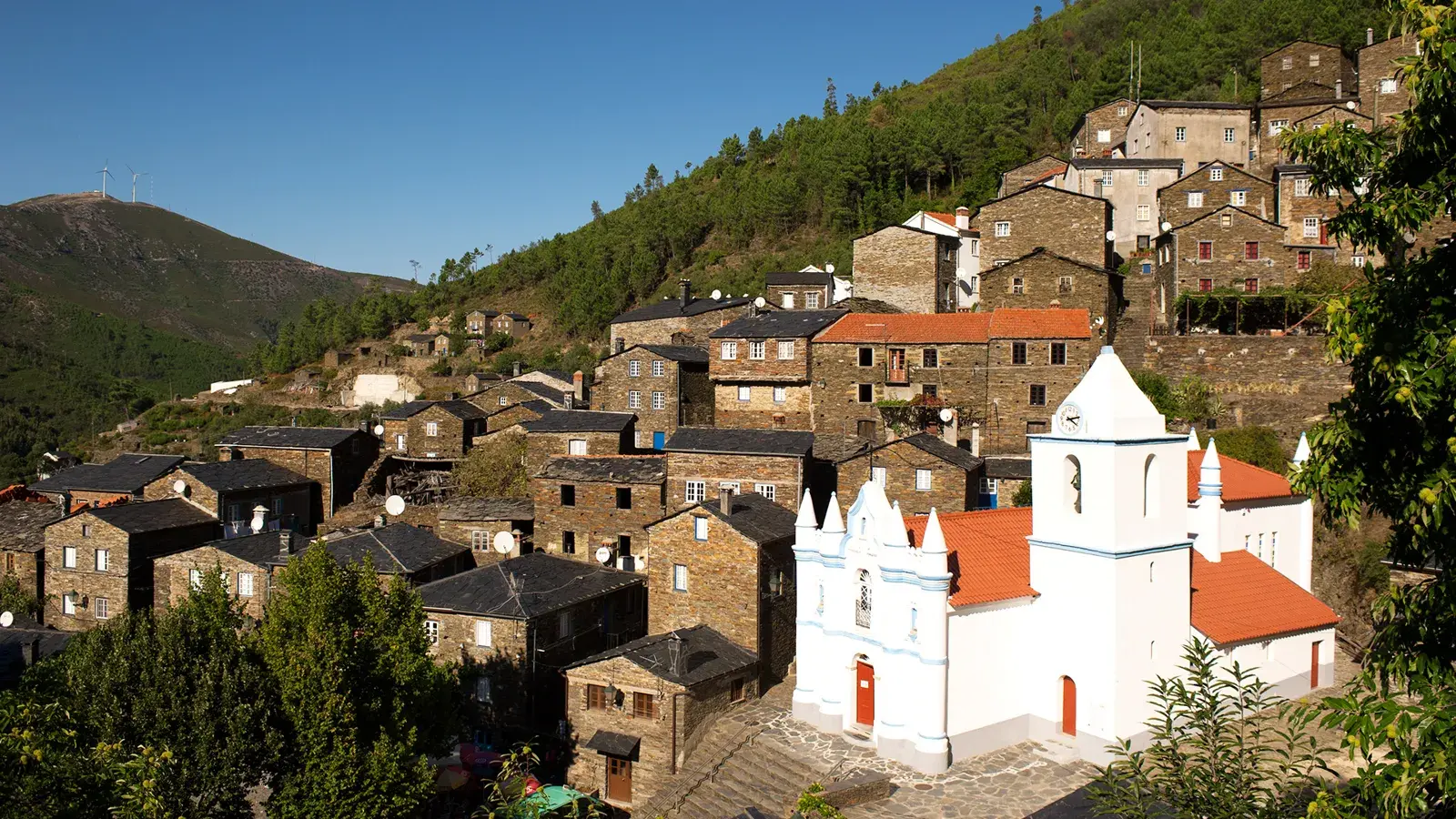
On the slopes of the Serra do Açor, the parish of Piódão is considered one of the most beautiful and historic in Portugal. Schist houses and slate roofs, cobbled lanes, channels of crystal-clear water running alongside the streets. An idyllic place that takes you back in time.
Piódão
These days, Piódão hardly needs an introduction. It is one of the best-known historic villages in Portugal — perhaps the best-known of all. A living nativity scene in shades of schist and blue. It has been listed as a Property of Public Interest since 1978 and is one of the 12 Historic Villages of Portugal.
The village keeps its original layout and is full of wonderful corners. If you haven't been yet, it's a must. The oldest record of the village dates from 1527, when King João III ordered a census of the kingdom; at the time it had around 20 inhabitants. Even so, traces of peoples from the late Neolithic to the Bronze Age — roughly 4000 to 700 BC — have been found here, giving it an important cultural heritage.
Foz d'Égua
A visit to Piódão goes hand in hand with a visit to Foz d'Égua. For the more adventurous, a 3 km trail follows the slopes of the Piódão stream, with animals grazing on the old terraces and incredible scenery along the way. At the end, you can enjoy a well-earned rest at the Foz d'Égua river beach, known for its suspension bridge and the beautiful schist houses on the hillsides.
The mystical beauty of this village is undeniable and impossible to ignore. Its schist buildings define its rural mountain character, making it one of the essential places to visit in the Serra do Açor.
Chãs d'Égua
Less famous but just as charming, Chãs d'Égua sits just above Foz d'Égua. This village holds the most important concentration of rock art known between the Tagus and the Lower Côa, with more than a hundred engraved rocks.